How to mount a nest box correctly
If you attach nesting boxes correctly, that is to say in a species-appropriate manner, then these will be accepted by the corresponding bird species. If you follow the following tips for correctly hanging nesting boxes on the house, the nesting aids are quickly adopted by building breeders, such as swifts, swallows, bats.
What do I generally have to consider when hanging a nesting box on the house?
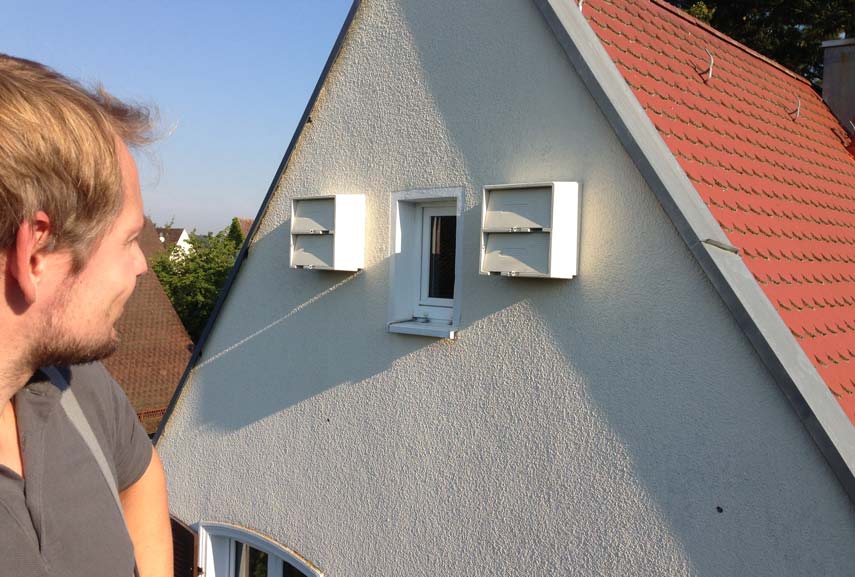
- The entry hole should ideally face east or southeast.
- Avoid hanging nesting boxes that are exposed to the blazing sun for long periods of time. Heat build-up can kill young birds and bats.
- Avoid hanging nesting boxes on the west facade. Here there is a risk that heavy rain from the main wind direction (west) will rain unnecessarily into the entry hole and cool young birds.
- Pay attention to a free approach
- Hang the nesting boxes at the correct height. Every bird that breeds at home has different requirements. We have listed the most important ones in our table.
- Hang up several nesting boxes. Options are good and birds like bats can choose the best option for them.
Where can I hang which nesting box at the house?
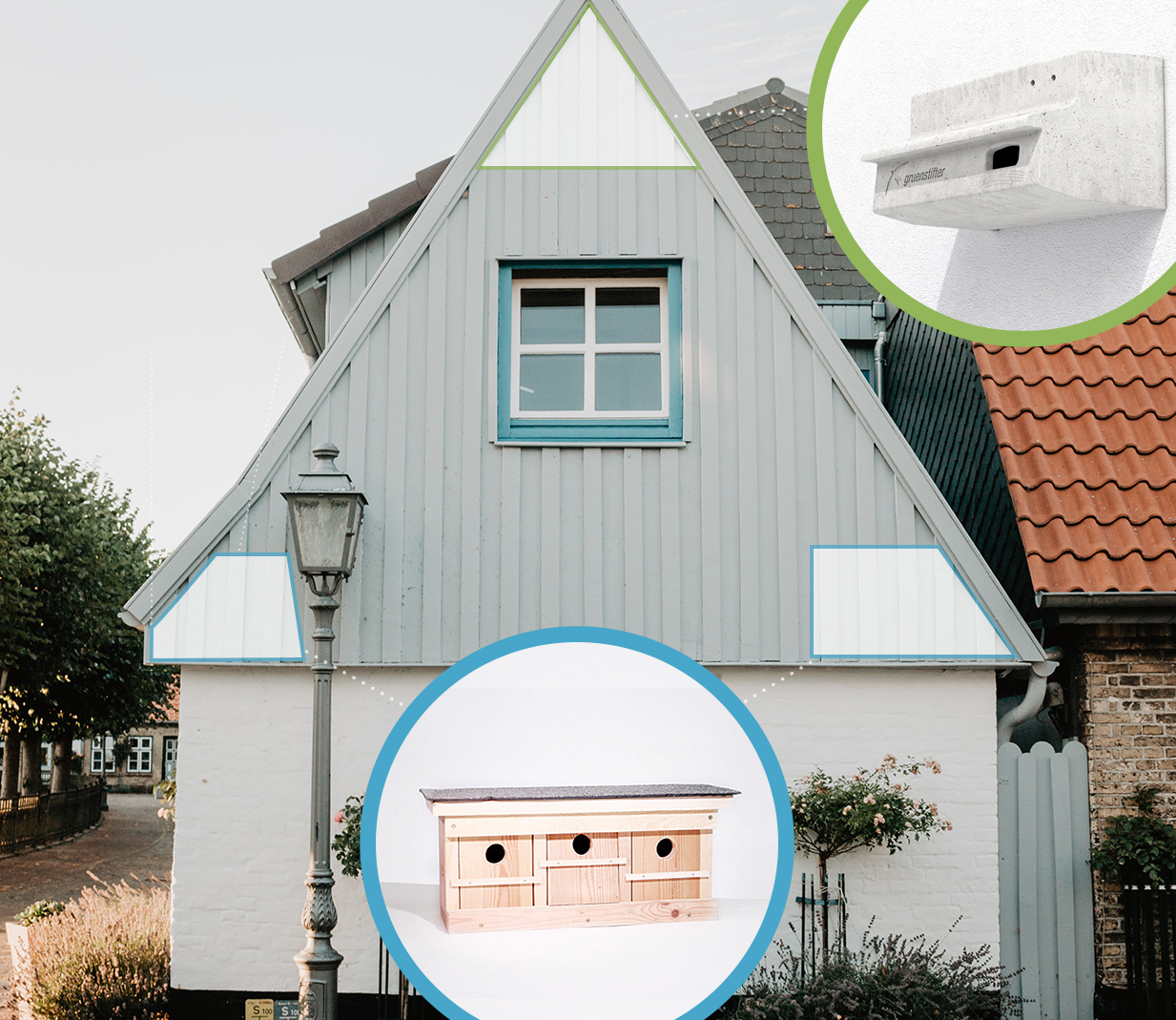
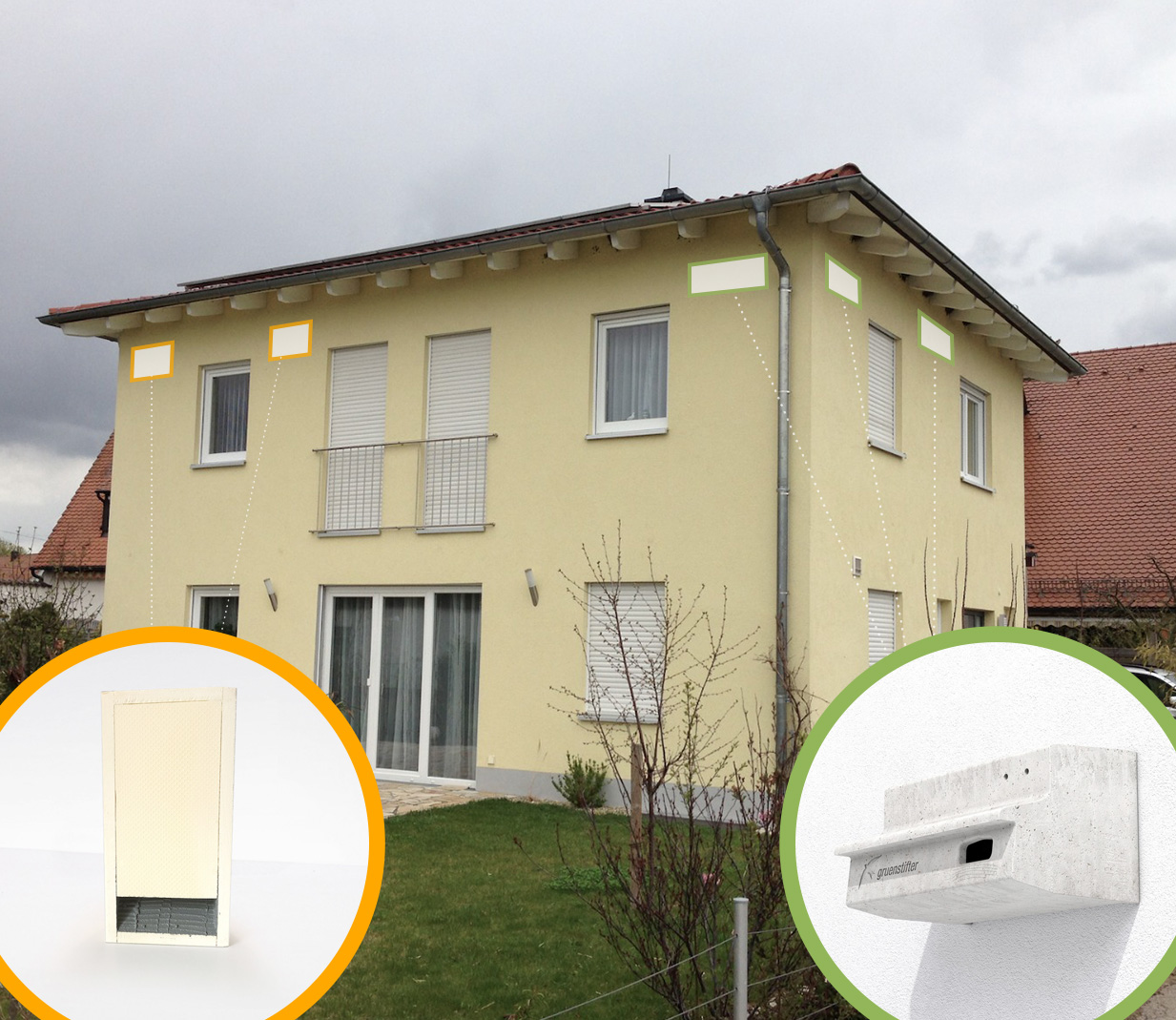
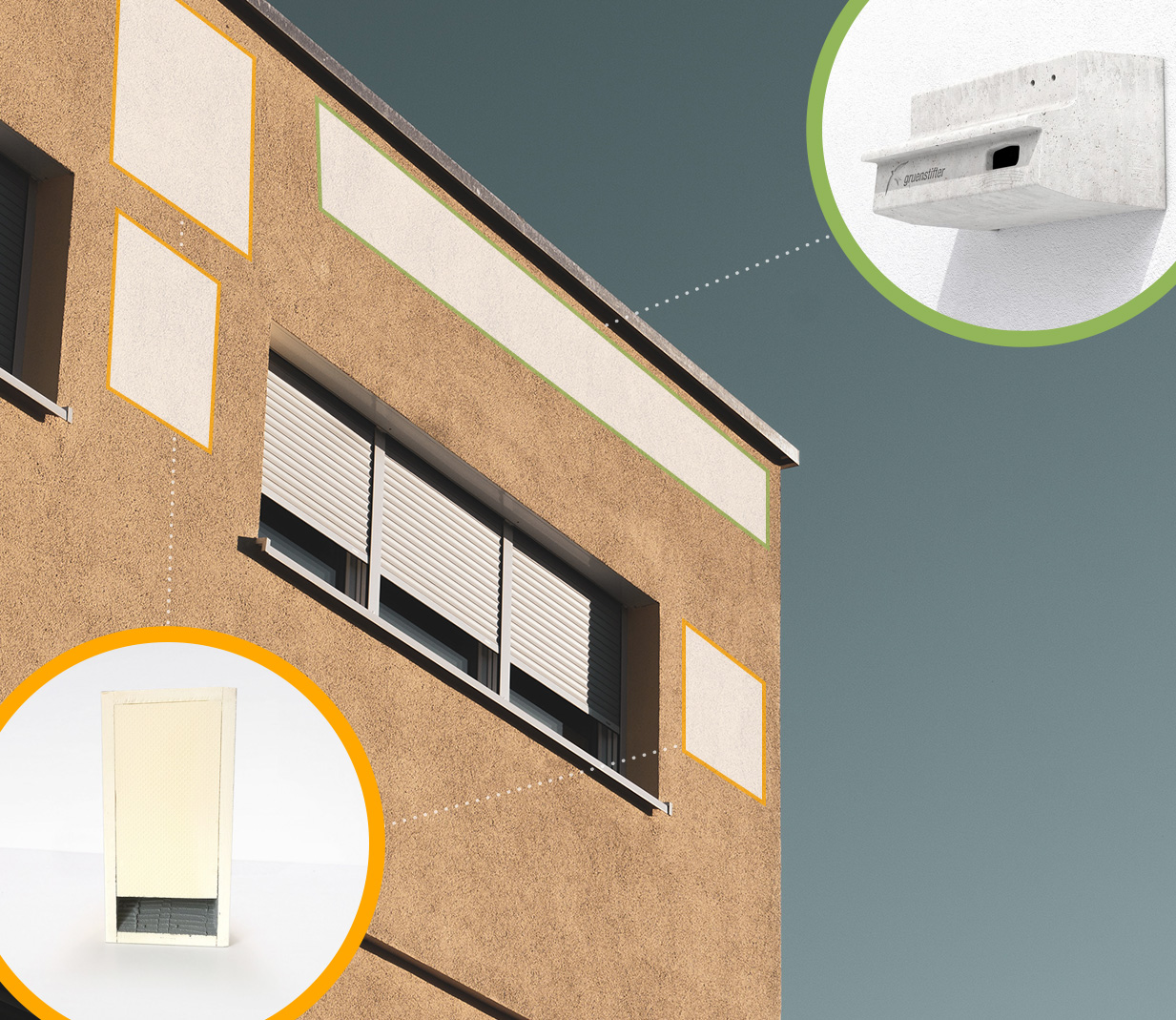
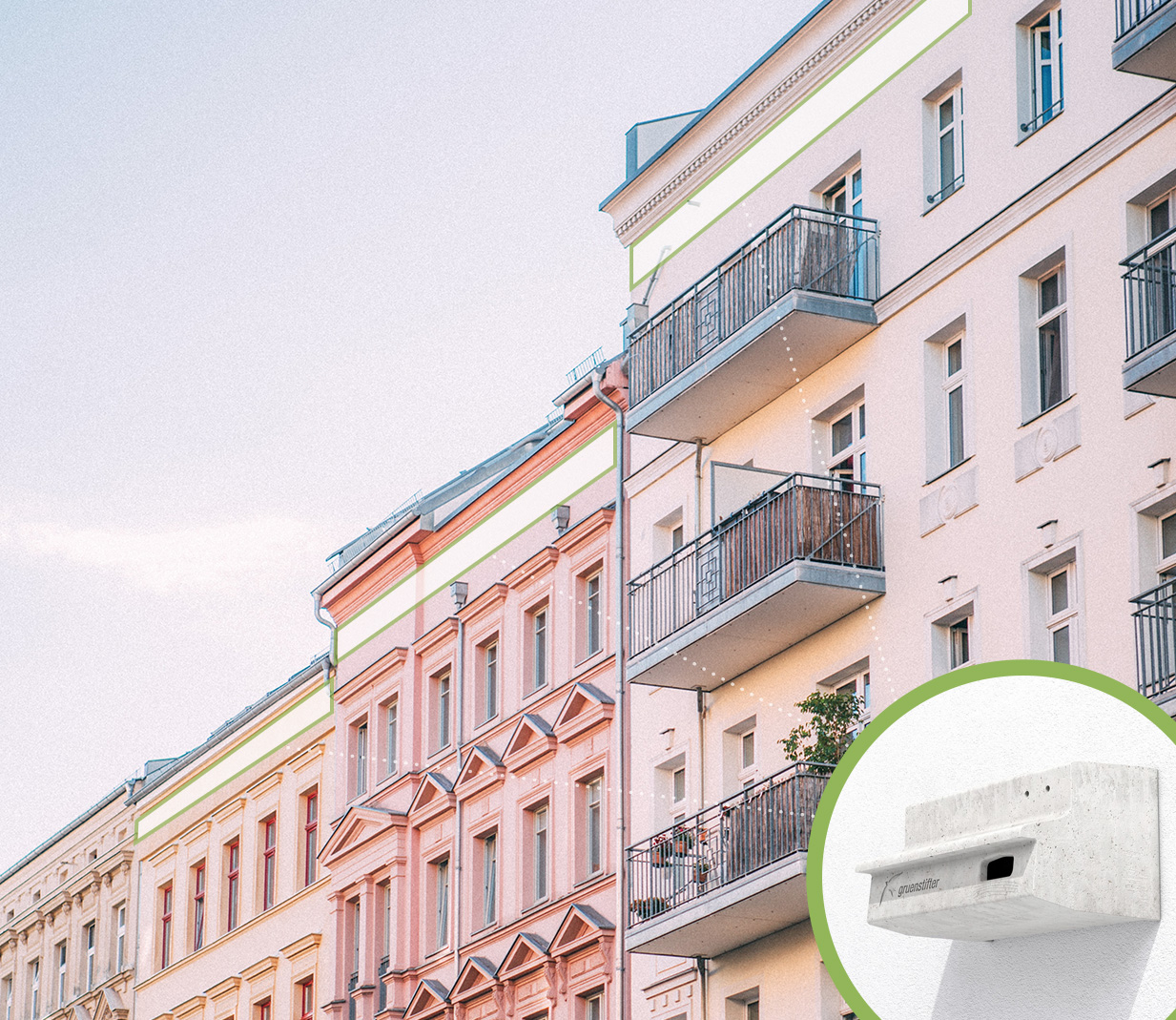
In the following section we show you where you can best attach which nesting box to the house so that it is occupied by birds. In the pictures, the areas are drawn in and outlined in color, which is suitable for the respective nesting box type and thus the respective potential animal species.
Hang the nest box on the family house
In a single-family house as a row house with a gable roof, it is advisable to attach nesting boxes for sparrows. The hanging locations are very good in the eaves area.
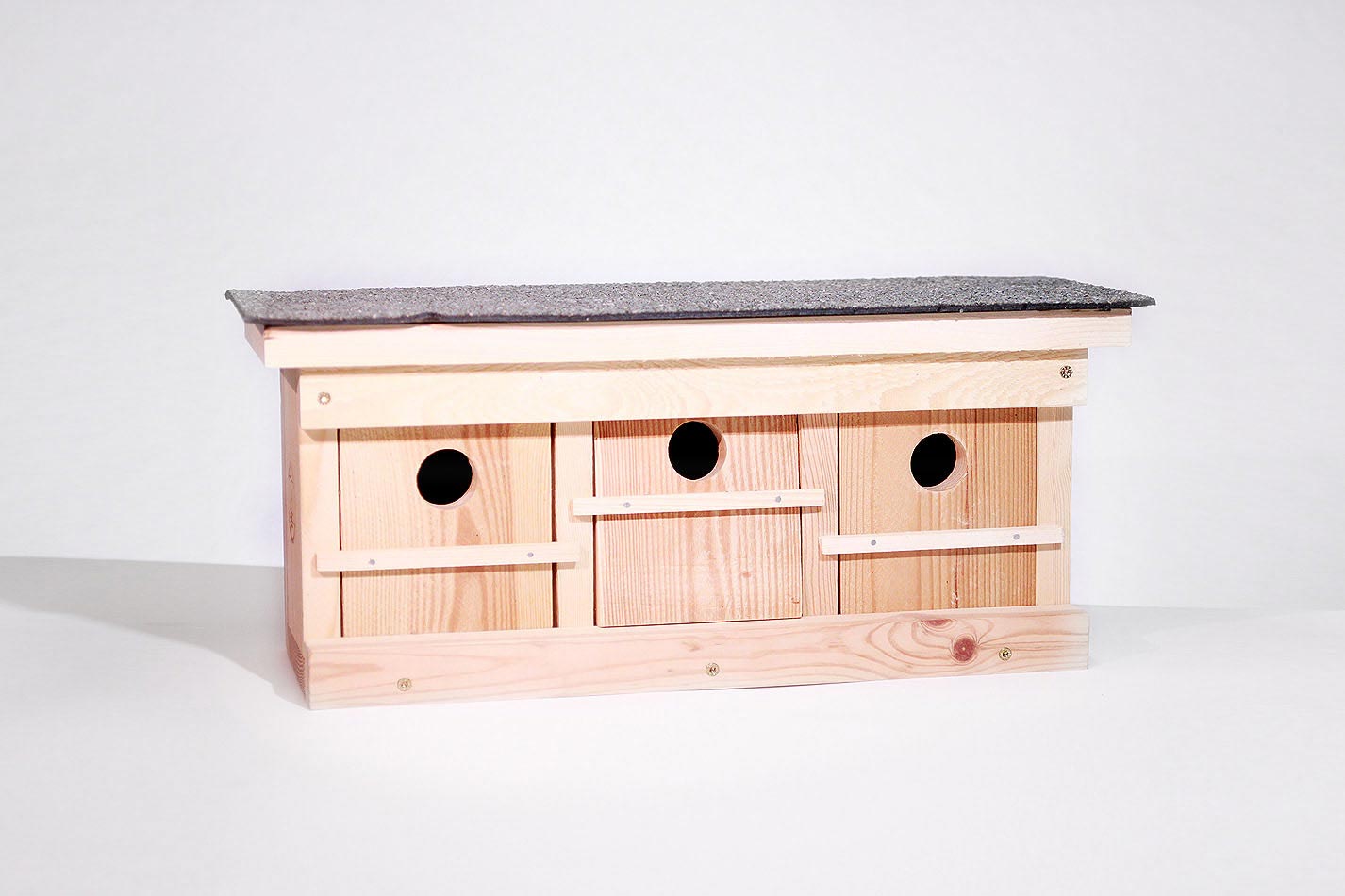
Sparrow colony houses can also be installed at a height of 1.5 meters if you don't have to go past them too often. Otherwise, sparrows like it in the morning sun. The direction of hanging should be east or southeast.
From a gable height of approx. 4 meters, which can be freely approached, the attachment of a swift box is also suitable. The charity wall swift box has the special feature that it is also used by sparrows and by bats.
More about the donor swift chest
Hang the nesting box on the detached house
In the case of a detached single-family house with a roof overhang, the attachment of nesting boxes in the eaves area is suitable.
The eaves protects against rain and excessive sunlight. In the example image, all cardinal points except north are suitable.
Bat boxes can be attached very well in the eaves area . In the case of an energetic renovation with an ETICS system, i.e. a thermally insulated facade, boxes can be integrated directly into the house facade.
Place the nesting box in the parapet
In tall buildings with a flat roof, the area of the parapet is particularly suitable for hanging nesting boxes.
If these areas are well exposed and ensure a free approach, then they are ideal for hanging nesting boxes for swifts, sparrows and bats.
If the parapet of the building is at least 25 meters high and can be freely approached, it is possible to attach a nesting box for peregrine falcons.
More about the Peregrine Falcon Box
Install the swift box in the eaves area of the old building.
The eaves area of old buildings is very well suited for creating nesting opportunities for building breeders, such as swifts, sparrows, bats. The eaves area offers sufficient exposure and a good approach for all animal species mentioned. A universal nesting box is particularly suitable here, which gives all animals the opportunity to find a breeding area.
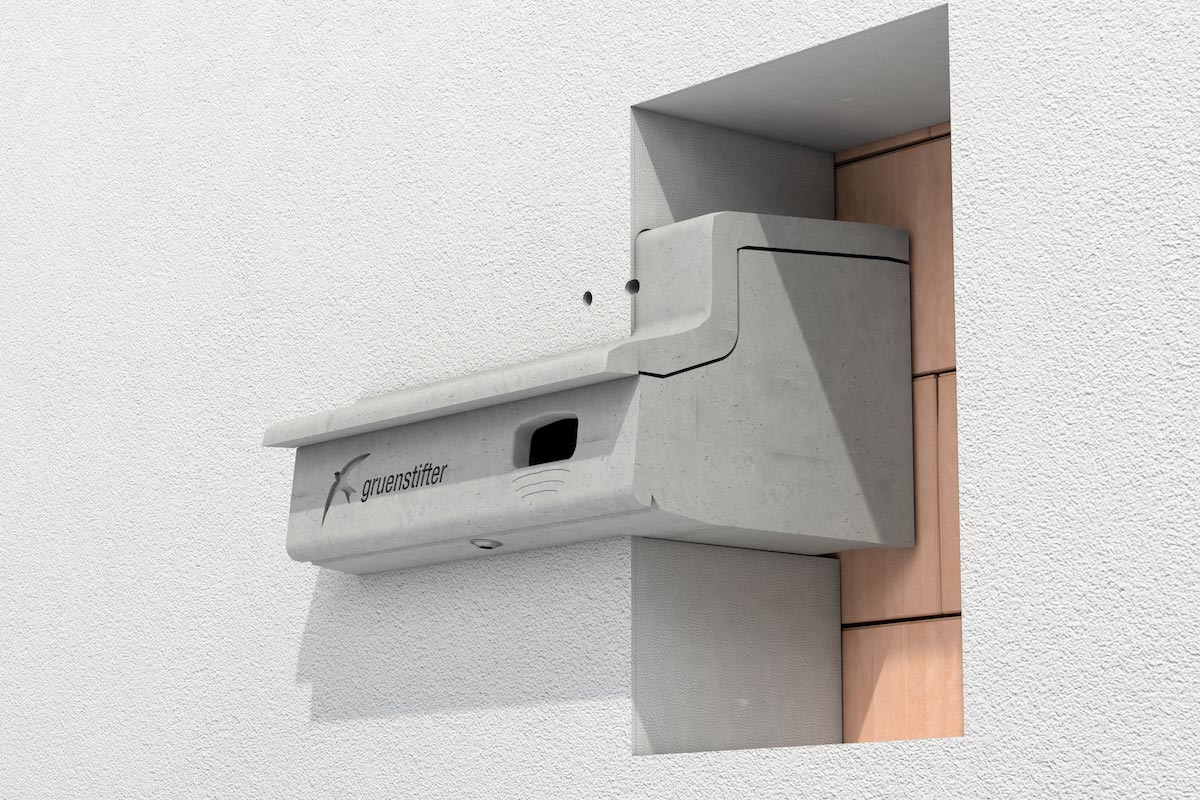
The nesting box from gruenstifter offers space for swifts, sparrows and bats. A universal nesting box.
Ultimately, the power of nature decides which species settles. Bats and birds can colonize the box at the same time.
More about the universal box from gruenstifter
Which nesting boxes are suitable for hanging on the house?
Bird species that breed on the house are known as so-called building breeders. These include common swifts, meal swallows, barn swallows, house sparrows, house red tail, blue swallows, jackdaws, kestrels, peregrine falcons, barn owls.
With bats one speaks of so-called building-living bats.
All these animal species have one thing in common: they use the house as a kind of artificial rock in the city, which you, as so-called cultural followers and opportunists, have discovered over the centuries as a breeding area.
So you use columns on buildings as breeding quarters. Due to their construction and condition, old buildings often offer breeding quarters. This often leads to conflict during renovations. The breeding quarters are often sealed and the animals consciously and unconsciously locked out through energetic renovations and modern construction methods.
Nesting boxes as artificial nesting aids help to give the so-called building breeders a new breeding area.
Nesting box for swifts
Hang up swift nest boxes on the house. Preferably in the eaves area and the parapet at a height of at least 4 meters. Hang up several nesting boxes, because swifts are breeding colonies.
Nesting box for house sparrows
Hang up sparrow colony houses. House sparrows are sociable and like to breed in colonies. In a single-family house, the installation in the protected eaves area is recommended.
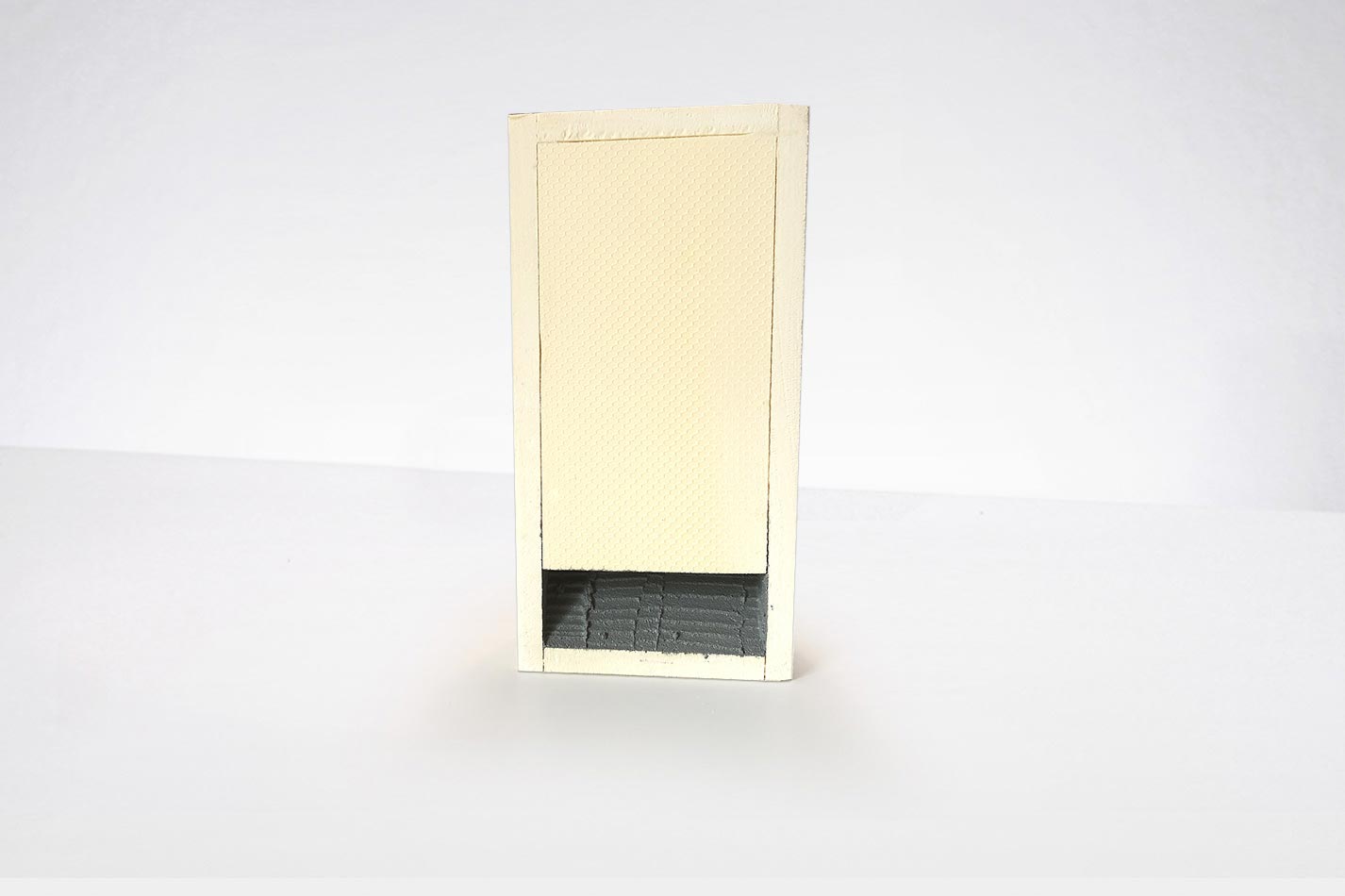
Nest box for bats
Is your house undergoing energy renovation? You can integrate nesting aids for bats into the WDV-S facade. The area directly below the parapet and the eaves area are particularly suitable for integration.
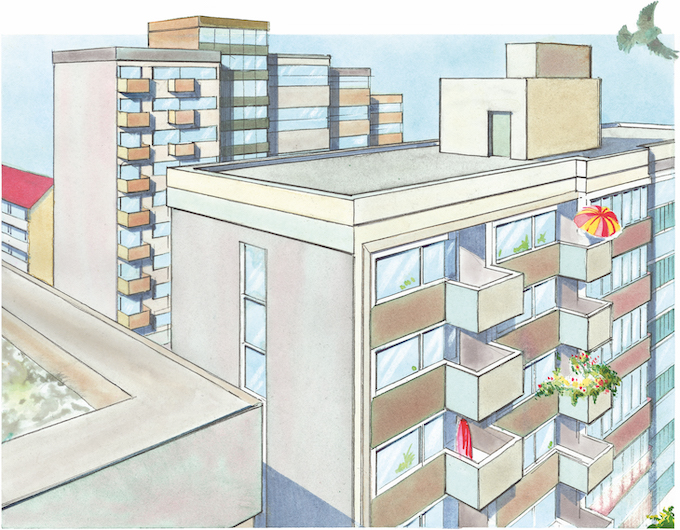
Nesting boxes attract birds and bring life to the city
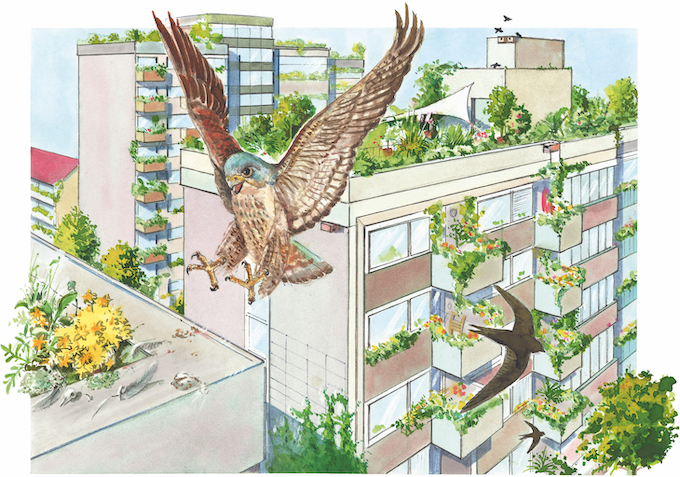
The two illustrations make it clear what happens when you green your balcony and roofs. Flowering plants and wild herbs attract insects, which in turn are food for many bird species and bats.
The offer of apartments for birds, i.e. nesting boxes, rounds off the thing and brings the city to life.